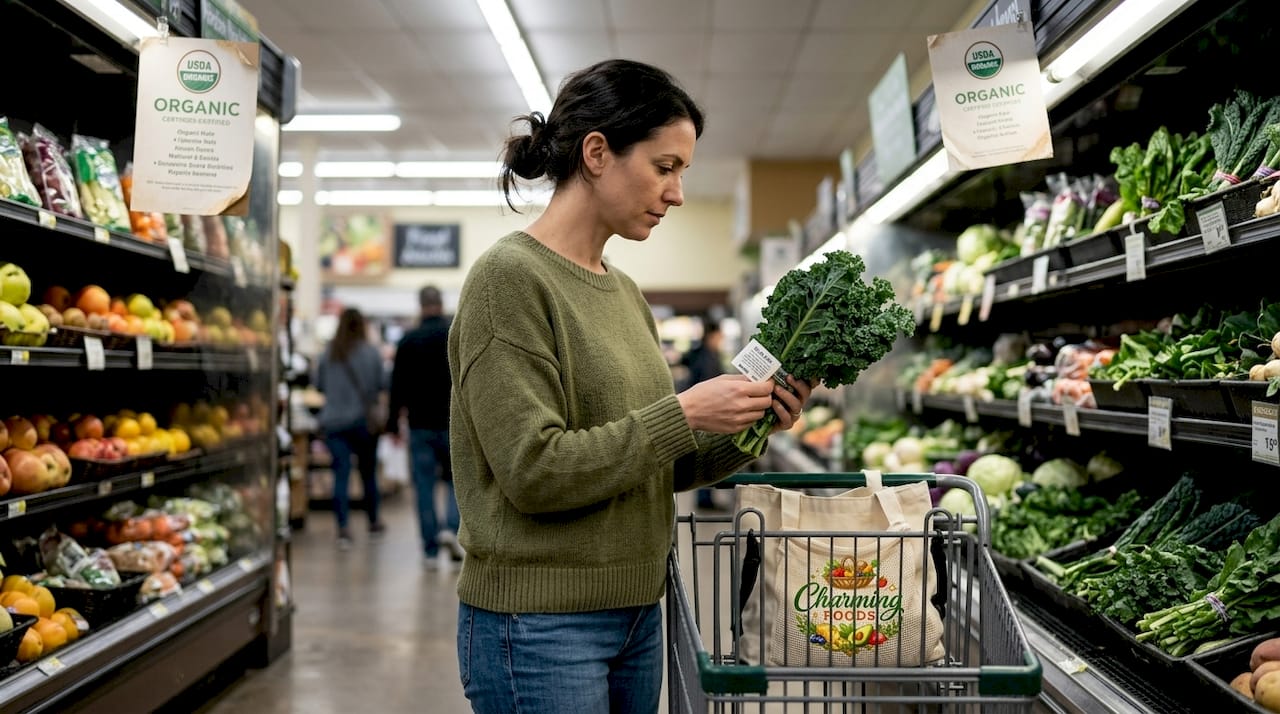
Discover the real benefits of organic foods for health
 0 Comments
TL;DR:
- Organic foods generally lower pesticide exposure, especially on thin-skinned produce.
- Nutritional differences between organic and conventional foods are inconsistent and dependent on many factors.
- The organic label primarily guarantees reduced synthetic chemicals and promotes environmental benefits, not zero chemicals.
Millions of Americans spend more on organic food every year, yet most are working with a mix of marketing claims, half-truths, and genuine science. The organic market topped $67 billion in U.S. sales recently, and that number keeps climbing. But what are you actually getting for the premium price? Some benefits are rock-solid. Others are overstated. This article breaks down what the research actually says about pesticide exposure, nutrition, health outcomes, and environmental impact, so you can shop smarter and feel genuinely confident about every choice you make.
Table of Contents
- Lower pesticide exposure: The evidence-backed advantage
- Nutrition and micronutrients: Are organic foods really better?
- Health outcomes: What does research show about organic diets?
- Sustainability and regulation: What the organic label actually means
- A realistic perspective: Organic foods in context
- Take the next step with organic foods
- Frequently asked questions
Key Takeaways
| Point | Details |
|---|---|
| Reduced pesticide exposure | Organic foods meaningfully lower your intake of synthetic pesticide residues, as confirmed by biomarker studies. |
| Nutritional content varies | Organic foods are not always higher in nutrients; diet quality matters most for overall health benefits. |
| Regulation defines organic | The USDA enforces strict organic certification rules, so the label means more than just ‘chemical-free.’ |
| Environmental impact | Organic farming practices generally conserve resources and reduce environmental pollution compared to conventional agriculture. |
| Importance of diet quality | A balanced and diverse whole-food diet contributes more to health than whether your food is organic or conventional. |
Lower pesticide exposure: The evidence-backed advantage
Let’s start with the benefit that holds up best under scientific scrutiny. Organic farming in the USA is governed by the USDA, which regulates exactly which substances can and cannot be used in certified organic production. Synthetic pesticides, most synthetic fertilizers, and genetically modified organisms are not allowed. That regulatory structure creates a measurable difference in what ends up on your food.
Urine biomarker studies are particularly telling. Researchers can measure pesticide metabolites, the chemical byproducts your body produces after breaking down pesticide residues, directly in urine samples. The lower pesticide biomarkers found in people with higher organic intake are compelling. Organic foods can reduce consumers’ exposure to pesticide residues, and this biomarker data shows lower pesticide metabolite levels among people who eat more organic food.
That said, context matters. Mayo Clinic: Organic Food clinical summaries note that the long-term health advantage of organic diets is still uncertain, beyond this lower pesticide exposure finding. The science hasn’t yet proven a clear chain from lower pesticide exposure to specific disease prevention at the population level, though many researchers believe it’s likely.
Here’s what the pesticide advantage actually looks like in practice:
- Thin-skinned produce like strawberries, spinach, and apples absorb more pesticide residue and are stronger candidates for buying organic.
- Thick-skinned produce like avocados, pineapples, and onions absorb very little residue, so conventional versions are generally fine.
- Washing produce reduces but does not eliminate residues, because some pesticides are systemic, meaning the plant absorbs them rather than just coating the surface.
- Children and pregnant women are considered higher-priority groups for reducing pesticide exposure, given developing nervous systems.
Pro Tip: Use the Environmental Working Group’s annual “Dirty Dozen” list as a quick shopping filter. Prioritize organic for those high-residue items first, and use your budget more strategically for the rest. You can find organic shopping hacks that help you stretch your dollar without sacrificing what matters most.
If you’re managing an organic grocery budget, start by flipping only your highest-residue items to organic. That single move captures most of the pesticide-reduction benefit without requiring a full budget overhaul.
Nutrition and micronutrients: Are organic foods really better?
Lower pesticide exposure is clear, but what about nutrition? Let’s dig in. This is where the organic conversation gets genuinely complicated, and where a lot of headlines oversimplify.

Here’s the honest answer: it depends. Micronutrient differences between organic and conventional foods are inconsistent and context-dependent. Organic is not uniformly higher in vitamins, minerals, or polyphenols. Sometimes organic wins. Sometimes conventional wins. Often there’s no meaningful difference at all.
A Stanford-led meta-analysis that reviewed 237 studies found little consistent evidence that organic foods are more nutritious or less risky in terms of overall health outcomes. Reduced pesticide exposure remains the clearer advantage.
What actually drives nutrient content? Mostly these factors:
| Factor | Impact on nutrients |
|---|---|
| Soil quality | High impact: mineral-rich soil produces more nutrient-dense crops |
| Time from harvest to table | High impact: nutrients degrade quickly after picking |
| Variety of crop grown | High impact: heirloom varieties often differ from commercial hybrids |
| Farming method (organic vs. conventional) | Low to moderate: less consistent effect than other factors |
| Season and sunlight exposure | Moderate to high: affects vitamin C and polyphenol content |
This table isn’t a knock on organic farming. It’s a reality check. A conventionally grown tomato picked yesterday from a local farm will often beat an organic tomato shipped across the country a week ago on nutritional value.
- Prioritize freshness and locality when possible.
- Consider choosing fresh produce that’s in season rather than imported organic options.
- Follow seasonal nutrition tips to maximize actual nutrient intake.
- If you have kids, reviewing organic nutrition for kids can help you prioritize what’s worth the premium at each stage of development.
Pro Tip: Instead of asking “is this organic?” ask “how fresh is this?” A local seasonal vegetable, even conventional, typically delivers more nutrients than an organic version that traveled 2,000 miles.
Health outcomes: What does research show about organic diets?
Now, let’s compare health outcomes across different diets and summarize what the research says. This is the big question most people are actually asking when they reach for the organic label.
Human studies do exist. Some show lower rates of certain diseases among organic consumers. But those studies consistently run into a major confounding problem: people who buy organic tend to exercise more, smoke less, eat more vegetables, and have higher incomes. It’s genuinely hard to isolate organic food’s effect from all these other healthy behaviors.
“Organic buyers tend to have healthier overall behaviors, which makes it very difficult to attribute health outcomes specifically to organic food consumption.” Mayo Clinic summary
A systematic review (2025) confirmed what many researchers suspected: evidence does not establish a firm, consistent health advantage for diets rich in organic fruit and vegetables versus conventional produce. The studies are too varied and the quality too mixed to draw a solid conclusion.
Here’s a side-by-side comparison of what the research shows versus what many assume:
| Common assumption | What research actually shows |
|---|---|
| Organic always leads to better health | No consistent evidence of this at population level |
| Conventional produce causes disease | No strong causal proof from human studies |
| More organic = longer life | Not established; lifestyle confounders are too large |
| Organic reduces pesticide exposure | Yes, this is well-supported by biomarker data |
Key takeaways from the health outcome research:
- The overall quality of your diet matters far more than whether items are organic.
- People who already eat lots of fruits, vegetables, legumes, and whole foods may see very little additional health benefit from switching to organic.
- Understanding what counts as a whole food guide matters more for your long-term health than any single label.
- Focus on healthy produce choices and diverse plant intake before obsessing over the organic question.
Sustainability and regulation: What the organic label actually means
Finally, let’s lay out what “organic” means, and doesn’t, under U.S. law and in terms of sustainability. This part often surprises people.
The word “organic” on a food label is not a marketing term. It’s a federally regulated designation. The USDA organic rules are administered through the National Organic Program (NOP), which sets specific certification requirements for farms, handlers, and processors. If a product uses the USDA organic seal, it has been certified to meet those standards by an accredited certifier.
What the organic label actually guarantees:
- No synthetic pesticides from a prohibited list (some naturally-derived substances are still allowed)
- No synthetic fertilizers or sewage sludge
- No GMOs in production or processing
- No irradiation used for preservation
- Soil health practices that build organic matter over time
On the environmental side, the evidence is more encouraging. Organic environmental benefits are documented in systematic assessments, particularly regarding reduced chemical runoff, improved soil biodiversity, and lower synthetic nitrogen pollution.
| Environmental factor | Organic farming outcome |
|---|---|
| Synthetic chemical runoff | Significantly reduced |
| Soil biodiversity | Typically higher |
| Synthetic nitrogen pollution | Lower than conventional |
| Carbon sequestration in soil | Potentially higher over time |
| Animal welfare | Varied; not consistently better across all studies |
What the label does NOT guarantee: that the food is completely chemical-free. Some naturally occurring substances, and a small list of approved synthetic exceptions, are permitted under NOP rules. This matters a lot for consumers who assume “organic” equals “zero chemicals.”
For deeper clarity on what labels actually communicate, exploring organic food transparency is worth your time. You can also look into fair trade benefits as a complementary certification that covers worker welfare, which organic alone doesn’t address.
A realistic perspective: Organic foods in context
Having covered the facts, what’s our real-world advice? At Charming Foods, we believe the organic conversation gets polluted by hype on both sides. Advocates oversell it. Skeptics dismiss it unfairly. Neither approach helps you.
Here’s what we’ve come to believe after looking honestly at the research. Pesticide reduction is the most credible, best-supported reason to buy organic, especially for high-residue produce and vulnerable populations like kids and pregnant women. That benefit is real and measurable.
But the broad health claims? Often overstated. If you’re already eating a diet rich in vegetables, fruits, legumes, and whole grains, the incremental benefit of switching everything to organic is likely smaller than simply improving your overall diet quality. That’s not a reason to avoid organic. It’s a reason to prioritize wisely.
Label skepticism is also healthy. “Organic” does not mean “no chemicals,” and it does not mean “local” or “humanely raised” by default. Treating it as a magic upgrade leads to expensive disappointment. Use it as one useful signal among several, including freshness, seasonality, and sourcing transparency. Making informed organic choices means reading beyond the seal.
Take the next step with organic foods
Ready to make smarter organic choices? Explore the options below.
Understanding what organic food actually delivers gives you real power at the grocery store. You’re no longer guessing. You’re buying based on evidence.

At Charming Foods, we make it easier to act on that knowledge. Our store carries certified organic options across fresh produce, pantry staples, and seasonal picks, backed by transparent sourcing information. Start by reviewing our guide to making informed organic choices, then browse our curated selection with fresh produce selection tips to find exactly what fits your health goals and budget. Quality, convenience, and clarity in one place.
Frequently asked questions
Do organic foods always contain more nutrients than conventional foods?
No. Micronutrient differences between organic and conventional foods are inconsistent, and organic is not reliably higher in vitamins or minerals across the board.
Is choosing organic food the best way to improve health?
Organic food reduces pesticide exposure, but diet quality matters more for health outcomes than simply swapping conventional items for organic ones.
What does the ‘organic’ label guarantee in the USA?
The USDA NOP certification regulates organic labeling standards, prohibiting synthetic pesticides and GMOs, but organic does not mean completely chemical-free.
Are environmental benefits part of organic food advantages?
Yes. Organic farming practices typically reduce synthetic chemical pollution and support soil biodiversity more effectively than conventional farming methods.